Start a Non-Medical Home Care Organization in California (HCO)
Which bundle do you need? California is a regulated state.
Get the Regulated State Bundle for CaliforniaWhat Is a Non-Medical Home Care Agency Called in California?
What Is a Non-Medical Home Care Agency Called in California?
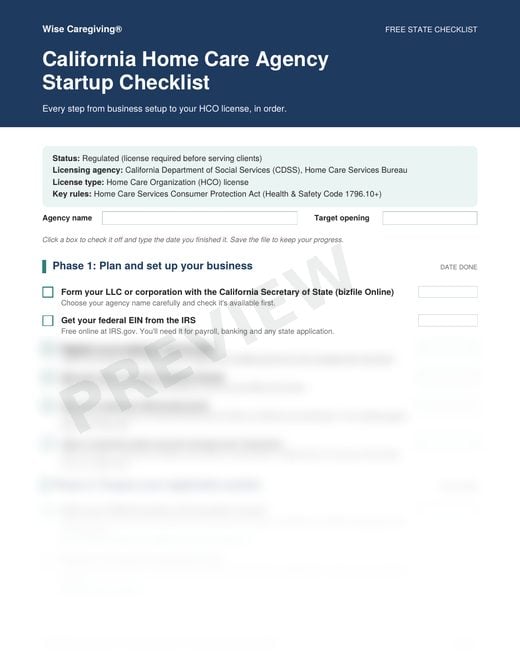 Preview of page 1 of 3
The terminology used for non-medical home care agencies varies across the United States.
In California, these businesses are referred to as Home Care Organizations (HCOs).
If you plan to start a home care business in California, your agency must comply with the Home Care Services Consumer Protection Act. This law requires businesses that provide non-medical home care services to obtain a Home Care Organization license through the California Department of Social Services (CDSS).
Because licensing requirements differ from state to state, it is important to understand both the general business startup steps and the California licensing requirements before opening your agency.
Home Care Organizations provide non-medical assistance to individuals who need help remaining safely in their homes. These services are commonly used by seniors, individuals with disabilities, and people recovering from illness or injury.
Typical services may include:
• companionship
• assistance with personal care
• meal preparation
• light housekeeping
• transportation and errands
• medication reminders
These services do not include skilled medical care, such as nursing services or medical treatments.
California Agency Responsible for Home Care Licensing
Home Care Organizations in California are regulated by the California Department of Social Services (CDSS) through the Home Care Services Branch.
This department is responsible for licensing home care agencies and ensuring they comply with California’s home care laws and consumer protections.
Official CDSS website:
https://www.cdss.ca.gov/home-care-services
California Administrative Code for Home Care Organizations
Non-medical home care agencies in California are regulated under:
The Home Care Services Consumer Protection Act
(California Health and Safety Code §1796)
and
California Code of Regulations – Title 22
These laws establish requirements for:
• Home Care Organization licensing
• caregiver registration
• background checks
• employee training requirements
• operational standards
• consumer protections
Understanding these regulations helps ensure your Home Care Organization operates legally in California.
Step 1: Choose Your Business Structure
Before applying for a Home Care Organization license in California, you must establish your legal business entity.
Many home care entrepreneurs choose to form a Limited Liability Company (LLC) because it provides liability protection and flexible taxation.
Common business structures include:
• Sole Proprietorship
• Partnership
• Corporation
• Limited Liability Company (LLC)
You can register your business with the California Secretary of State.
https://bizfileonline.sos.ca.gov
Step 2: Register Your Business in California
After choosing a business structure, you must formally register your business with the state.
This usually involves filing one of the following documents:
• Articles of Organization (LLC)
• Articles of Incorporation (Corporation)
You can also search to see if your desired business name is available through the California Secretary of State business database.
Business search:
https://bizfileonline.sos.ca.gov/search/business
Step 3: Obtain a Federal Employer Identification Number (EIN)
Most home care agencies must obtain a Federal Employer Identification Number (EIN) from the Internal Revenue Service.
An EIN is used for:
• filing taxes
• opening a business bank account
• hiring employees
Apply for an EIN here:
Step 4: Apply for a Home Care Organization License in California
To legally operate a Home Care Organization (HCO) in California, you must apply for licensure through the California Department of Social Services (CDSS).
The licensing process requires submitting an application and supporting documentation showing that your agency meets California’s regulatory requirements.
Common Home Care Organization Application Forms
The CDSS licensing process typically requires submission of several application forms, including:
• HCS 200 – Application for Home Care Organization License
• HCS 215 – Licensee Applicant Information
• HCS 308 – Designation of Home Care Organization Responsibility
• HCS 309 – Organization Structure
• HCS 402 – Employee Dishonesty Bond
• HCS 9165 – Board of Directors Statement
Applicants may also need to submit additional documentation depending on their business structure.
Where to Submit Your Application
Completed application packets are typically submitted to:
California Department of Social Services
Home Care Services Branch
744 P Street, M.S. 9-14-90
Sacramento, CA 95814
Official application information:
https://www.cdss.ca.gov/home-care-services
Step 5: Develop Policies and Procedures
All Home Care Organizations must maintain written policies and procedures that explain how the agency operates.
These policies typically address:
• client admissions and discharge procedures
• caregiver qualifications and supervision
• infection control procedures
• abuse reporting requirements
• complaint resolution processes
These policies help ensure safe care and regulatory compliance.
Step 6: Hire and Train Caregivers
Home Care Organizations must recruit qualified caregivers and provide appropriate training before they begin working with clients.
Common requirements include:
• caregivers must be at least 18 years old
• criminal background checks
• tuberculosis screening
• entry-level caregiver training
California typically requires at least five hours of initial training before a caregiver begins working with a client.
Starting January 1, 2027, aides must also complete dementia-care training before working with clients and every year after (SB 412).
Step 7: Obtain Required Insurance
Home care agencies must maintain insurance to protect their business and clients.
Common insurance policies include:
• General Liability Insurance
• Professional Liability Insurance
• Workers’ Compensation Insurance
• Employee Dishonesty Bond
California requires a minimum $10,000 employee dishonesty bond for Home Care Organizations.
Step 8: Establish Your Office and Administrative Operations
Before accepting clients, your Home Care Organization should establish the administrative structure needed to operate the business.
This includes setting up your office systems, communication channels, and recordkeeping processes.
Your agency should be able to maintain secure records for:
• employee files
• client care documentation
• training records
• background check documentation
• billing and administrative records
Many new agencies begin as home-based businesses, especially during the early stages of operation.
California typically allows Home Care Organizations to operate from a home office, provided the agency maintains proper recordkeeping and remains accessible for regulatory communication.
However, you should always verify:
• local zoning requirements
• business licensing requirements in your city or county
• secure storage of client and employee records
Some agencies choose to use a virtual office or mailing address for administrative purposes. While this may be acceptable for receiving mail, your agency must still maintain proper access to operational records.
As the agency grows, many owners transition to a commercial office location to support training sessions, administrative staff, and caregiver meetings.
Step 9: Begin Marketing Your Home Care Organization
Once your Home Care Organization is licensed and operational, the next step is attracting clients and building referral relationships in your community.
Marketing plays an important role in growing a successful home care business.
Common marketing strategies include:
• creating a professional website
• building relationships with hospitals and healthcare providers
• networking with senior living communities
• establishing referral partnerships
• participating in community events
• advertising locally and online
Consistent marketing and strong community relationships can help your agency generate steady referrals and build long-term client trust.
START A NON-MEDICAL HOME CARE ORGANIZATION (HCO) IN CALIFORNIA:
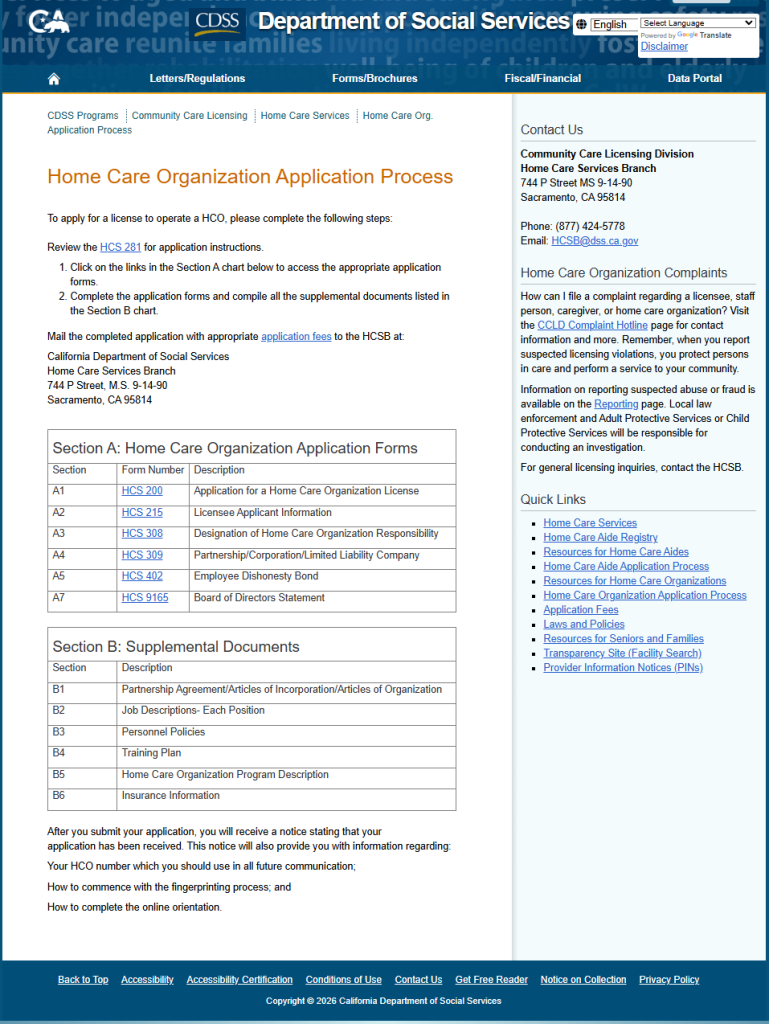
HOME CARE ORGANIZATION COMPLIANCE FORMS & DOCUMENTS THAT COVER SECTION B:
Licensing requirements for non-medical home care agencies vary by state. If you are researching how to start a home care business in another state, explore the full state-by-state guides available on Wise Caregiving®.
Last Updated: October 2026
LIVE UPDATELatest California licensing updates
October 2026: No new changes to California’s home care licensing requirements this month.
Earlier in 2026: Starting January 1, 2027, California home care aides must complete dementia-care training before providing care and every year after (SB 412).
We check California’s official state sources at the start of every month. Last checked: October 2026.
California is a regulated state
The bundle you need: Regulated State Start-Up Bundle, with a policy and procedure manual written for California and your agency, plus the full library of 250+ templates.
Get the Regulated State Bundle for California
Only need part of it? You can buy the custom California manual on its own, the forms bundle without a manual or individual forms separately. Questions? Message us in the shop chat.