Start a Homemaker Companion Agency in Connecticut
Which bundle do you need? Connecticut is a regulated state.
Get the Regulated State Bundle for ConnecticutWhat Is a Non-Medical Home Care Agency Called in Connecticut?
In Connecticut, non-medical home care agencies are referred to as Homemaker Companion Agencies (HCAs).
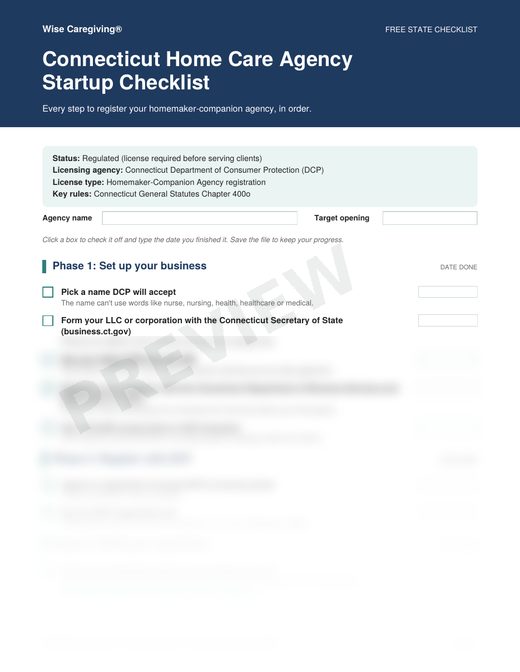 Preview of page 1 of 3
These agencies provide non-medical support services that help individuals remain safely in their homes while receiving assistance with daily activities.
Homemaker companion services may include:
• meal preparation
• light housekeeping
• laundry and household organization
• grocery shopping and errands
• companionship activities such as walks or games
• assistance with personal hygiene or daily routines
These services do not include skilled medical care, such as nursing services or medical treatments.
Connecticut Agency Responsible for Registration
Homemaker Companion Agencies in Connecticut must register with the Connecticut Department of Consumer Protection (DCP) before providing services.
The Department of Consumer Protection oversees the registration process and enforces consumer protection requirements for homemaker companion agencies.
Official website:
Connecticut Law for Homemaker Companion Agencies
Homemaker Companion Agencies operate under:
Connecticut General Statutes §§20-670 to 20-681
This law establishes requirements for:
• agency registration
• employee background checks
• service contracts with clients
• insurance or minimum $10,000 surety bond requirements
• recordkeeping and inspection rights
Understanding these requirements is essential before opening a homemaker companion agency in Connecticut.
Step 1: Choose Your Business Structure
Before registering your homemaker companion agency, you must establish your legal business entity.
Common business structures include:
• Sole Proprietorship
• Partnership
• Corporation
• Limited Liability Company (LLC)
Many agency owners choose to form an LLC because it provides personal liability protection and flexible taxation.
Businesses must register through the Connecticut Secretary of the State.
Step 2: Register Your Business in Connecticut
After selecting your business structure, you must register your business with the Connecticut Secretary of the State.
During this process you will:
• register your legal business entity
• confirm your business name availability
• file Articles of Organization or Incorporation
Your business name should not contain terms that imply medical services, such as:
• nurse
• nursing
• medical
• healthcare
If your legal name includes restricted wording, you may need to register a trade name (DBA) through your local municipality.
Step 3: Register Your Homemaker Companion Agency with the Department of Consumer Protection
To legally operate in Connecticut, homemaker companion agencies must obtain a certificate of registration from the Department of Consumer Protection (DCP).
Registration Requirements
The registration process typically requires:
• completed Homemaker Companion Agency application
• registration fee ($375, renewed yearly by October 31)
• agency contact information
• criminal background checks for owners or operators
• sworn certification of compliance with state law
Registration with the Department of Consumer Protection costs $375 and must be renewed every year by October 31 (Connecticut General Statutes §§20-670 to 20-681). Starting January 1, 2027, new employees must receive at least 8 hours of paid training within 90 days of hire, plus yearly continuing education.
Agencies must also certify that they:
• conduct comprehensive background checks on employees
• provide written service agreements to clients
• maintain required insurance or bonding
• keep records available for inspection by regulators
Step 4: Obtain Required Insurance or Bond
Connecticut law requires homemaker companion agencies to maintain a minimum $10,000 surety bond or insurance policy.
This coverage must include protection against theft by an employee from a client.
Many agencies also obtain additional coverage such as:
• General Liability Insurance
• Workers’ Compensation Insurance
• Professional Liability Insurance
These policies help protect the agency and its clients.
Step 5: Develop Policies and Procedures
Homemaker companion agencies should establish written policies and procedures describing how the agency operates.
These policies help ensure compliance and consistent service delivery.
Typical policies include:
• employee hiring and background screening procedures
• client service agreements and care plans
• complaint resolution procedures
• incident reporting procedures
• confidentiality and recordkeeping policies
Step 6: Hire and Train Staff
Agencies must recruit qualified caregivers and conduct background checks on all employees.
Typical hiring procedures include:
• criminal background screening
• reference verification
• identity verification
• documentation of employee qualifications
Although Connecticut may not mandate a specific training program, agencies are encouraged to provide training in:
• personal care assistance
• safety procedures
• emergency response
• infection prevention
Step 7: Office Requirements for Homemaker Companion Agencies in Connecticut
Connecticut law does not specifically require a commercial office location for homemaker companion agencies.
Many agencies operate as home-based businesses, particularly when starting out.
However, the agency must maintain:
• a valid business address
• accessible administrative records
• reliable contact information for clients and regulators
Some agencies choose to use virtual office services for mailing purposes, but the agency must still maintain access to operational records and remain reachable by the Department of Consumer Protection.
You should also verify local zoning regulations and municipal business licensing requirements before operating from a home office.
Step 8: Market Your Homemaker Companion Agency
Once your agency is registered, you can begin marketing your services within the community.
Common marketing strategies include:
• building referral relationships with healthcare providers
• networking with senior centers and community organizations
• creating a professional website
• establishing social media presence
• advertising locally and online
Building strong community relationships can help generate consistent client referrals.
Resources for Starting a Homemaker Companion Agency in Connecticut
Starting a homemaker companion agency requires planning, documentation, and knowledge of state regulations.
Wise Caregiving® provides professional templates and operational resources designed to help entrepreneurs start and manage non-medical home care businesses.
These tools include policy manuals, client forms, employee documentation, and administrative templates commonly used by home care agencies.
OBTAIN THE REQUIRED FORMS AND DOCUMENTS FOR YOUR AGENCY IN THE SHOP
Last Updated: October 2026
LIVE UPDATELatest Connecticut licensing updates
October 2026: The Department of Consumer Protection has published its lists of approved initial and annual training programs for homemaker-companion agencies. Starting January 1, 2027, agencies must give new staff at least 8 hours of paid training within 90 days of hire, plus continuing education (Public Act 26-50).
We check Connecticut’s official state sources at the start of every month. Last checked: October 2026.
Connecticut is a regulated state
The bundle you need: Regulated State Start-Up Bundle, with a policy and procedure manual written for Connecticut and your agency, plus the full library of 250+ templates.
Get the Regulated State Bundle for Connecticut
Only need part of it? You can buy the custom Connecticut manual on its own, the forms bundle without a manual or individual forms separately. Questions? Message us in the shop chat.